
What we actually go over
- Lifted or slipped shingles, especially along windward slopes and ridges
- Popped or backed-out nails, which lift the shingle above them
- Sealant that has gone hard and split
- Flashing that has pulled away from a wall, chimney or dormer
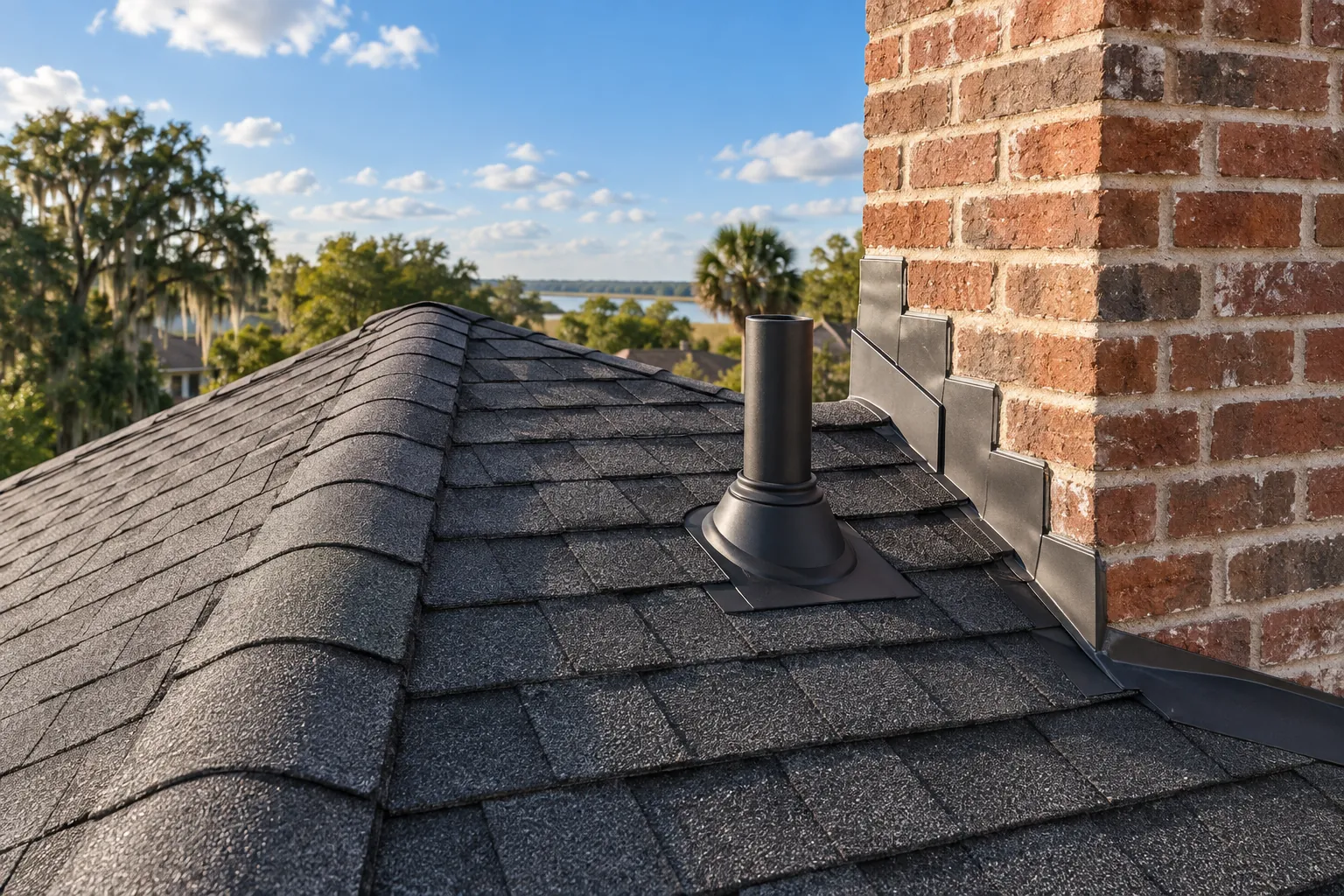
- Cracked pipe boots, the single most common leak we find
- Debris packed into valleys, which holds water against the roof
Why these are the expensive ones
None of that list is dramatic. A cracked boot is a small rubber collar around a vent pipe. Left alone it lets water run down the pipe and into the decking, and the first sign is a ceiling stain in a room three feet away.
By that point the job is a repair with decking involved rather than a fifteen minute fix. That gap is the entire argument for maintenance.
How we find it
We start with the free drone inspection. Most of these problems are visible from the air, and you see the photographs before anyone quotes anything. If the roof does not need a tune-up, we tell you that.
A tune-up only makes sense on a roof that is still sound. If yours is past that, read roof replacement instead, and we will say so rather than sell you work that will not hold.
How is a tune-up different from a repair?
A repair fixes something that has already failed. A tune-up deals with the things that are about to.
How often is it worth doing?
Once a year is sensible here, and after any named storm. The inspection that tells you whether it is needed is free.
Will a tune-up stop a leak I already have?
Sometimes, if the cause is a cracked boot or lifted flashing. If water has been getting in for a while, that is a repair.