How do you keep track of roofs across a whole portfolio?
Managing rentals across Tangipahoa and St. Tammany means more roofs than hours. Nobody climbs every one each year, so the roofs that cost the most are the ones nobody looked at until water was inside a unit.
We work through a portfolio building by building. Each roof gets flown and photographed, and each one gets a short written note. The most useful part is the list of roofs that need nothing, because that's what lets you spend the maintenance budget where it counts.
Do tenants need to be home?
No. The flight happens outside, and nobody goes into a unit or onto the roof. There are no ladders against the building while we fly. Send the addresses along with any access notes, like a locked gate or a dog in the yard, and we plan around them.
Tenants may notice a small drone over the roof. A quick heads-up from your office saves you a phone call.
What goes in the owner report
- Photos of every slope on every building, dated
- A plain note per property on what we saw
- A clear split between work that's needed now and things that can wait
- A price only where work is needed, with the photo that explains it
It's written so you can attach it to an owner report or a work order without translating it. If an owner asks why you're spending money on a roof, the photo does the explaining.
Maintenance, not only emergency calls
Most leak calls start small. A cracked pipe boot, a nail that's backed out, flashing pulled away from a wall, pine straw packed into a valley. Caught early, those are a roof tune-up. Left alone, they turn into a repair with wet decking and a ceiling to patch.
We sort every roof into one of three tracks: maintenance, repair or replacement. Nearly every roof needs some kind of maintenance. Very few need replacing, and we'll say so when one doesn't.
Managing to a budget? See year-end maintenance budgets for using what's left in November and December.
Which properties took damage after the storm?
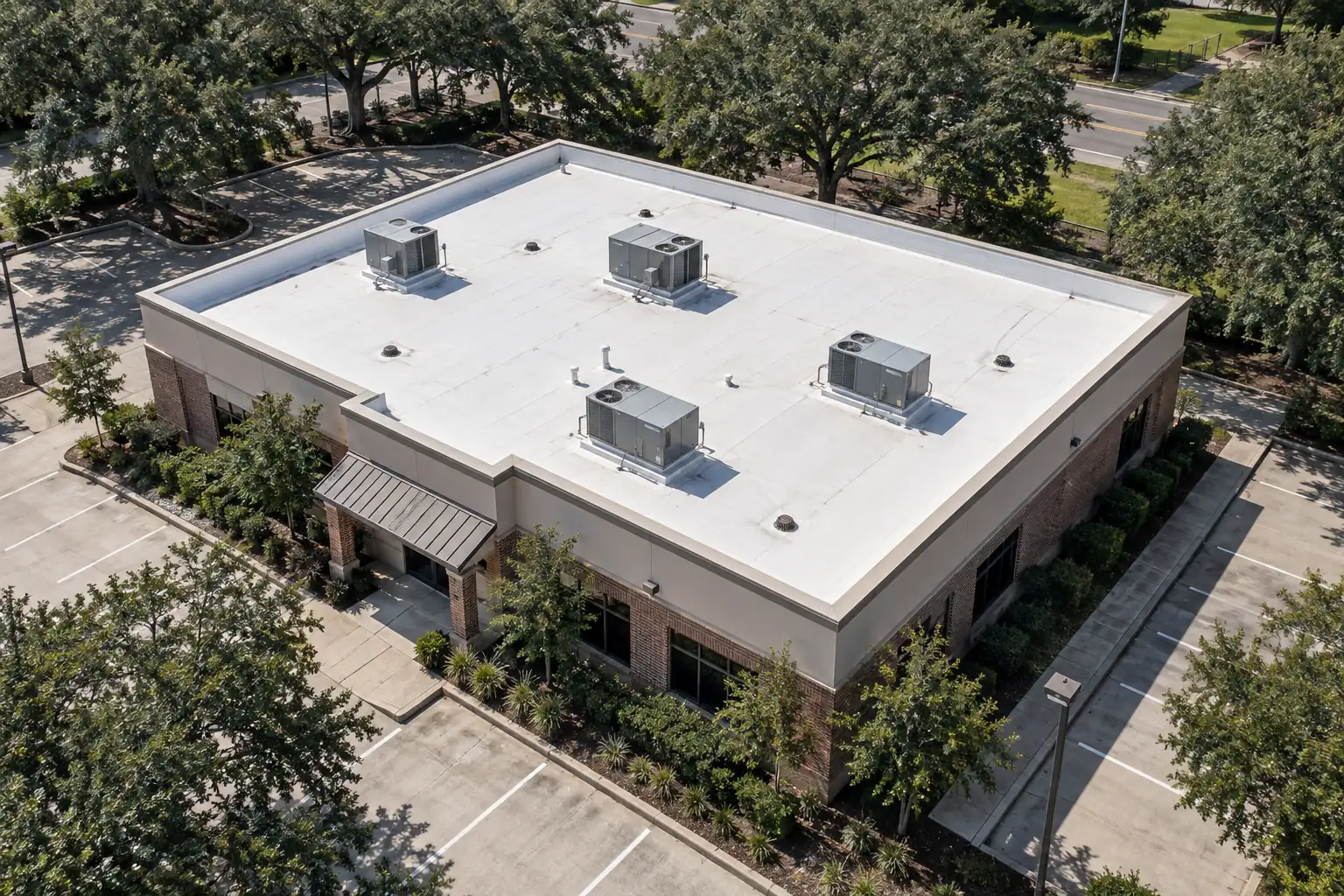
After a named storm every manager asks the same thing. A drone can get through a list of roofs without anyone going up a ladder. The dated photos give you and each owner a record of what the storm did. Claims are between the owner and their insurer. We document the roof and quote any repair.
For larger buildings and complexes, see commercial roof inspections.
Who do we deal with?
John Gagliano. He flies the roofs, writes the notes and the prices, and answers (504) 250-6065 himself. There's no call center between your office and the person who actually looked at the roof.
If an owner has a question about a photo or a price, you can put them straight through to him. Maintenance, repairs and reroofing all come from the same place, so nobody has to explain the building twice.
Common questions
Can you inspect several properties in one visit?
Usually, yes, if they're close together. Send the list of addresses and we'll plan the flights around the route. Each property gets its own set of photos and its own note, so you can file them per owner. If an address sits in airspace that needs FAA authorization, John gets it before he flies there.
Do you tell us when a roof doesn't need anything?
Yes. For a manager that's most of the value. A report that says every roof needs work is a sales pitch, not an inspection. If a roof is fine, the note says it's fine and there's no price attached. You keep the photos either way, and the drone inspection is free.
Can you handle repairs from tenant leak calls?
Yes, roof repair is part of what we do. Call (504) 250-6065 with the address and what the tenant is seeing. We fly the roof first, because a ceiling stain rarely sits right under the leak. You get the photo and a price before any work starts.